
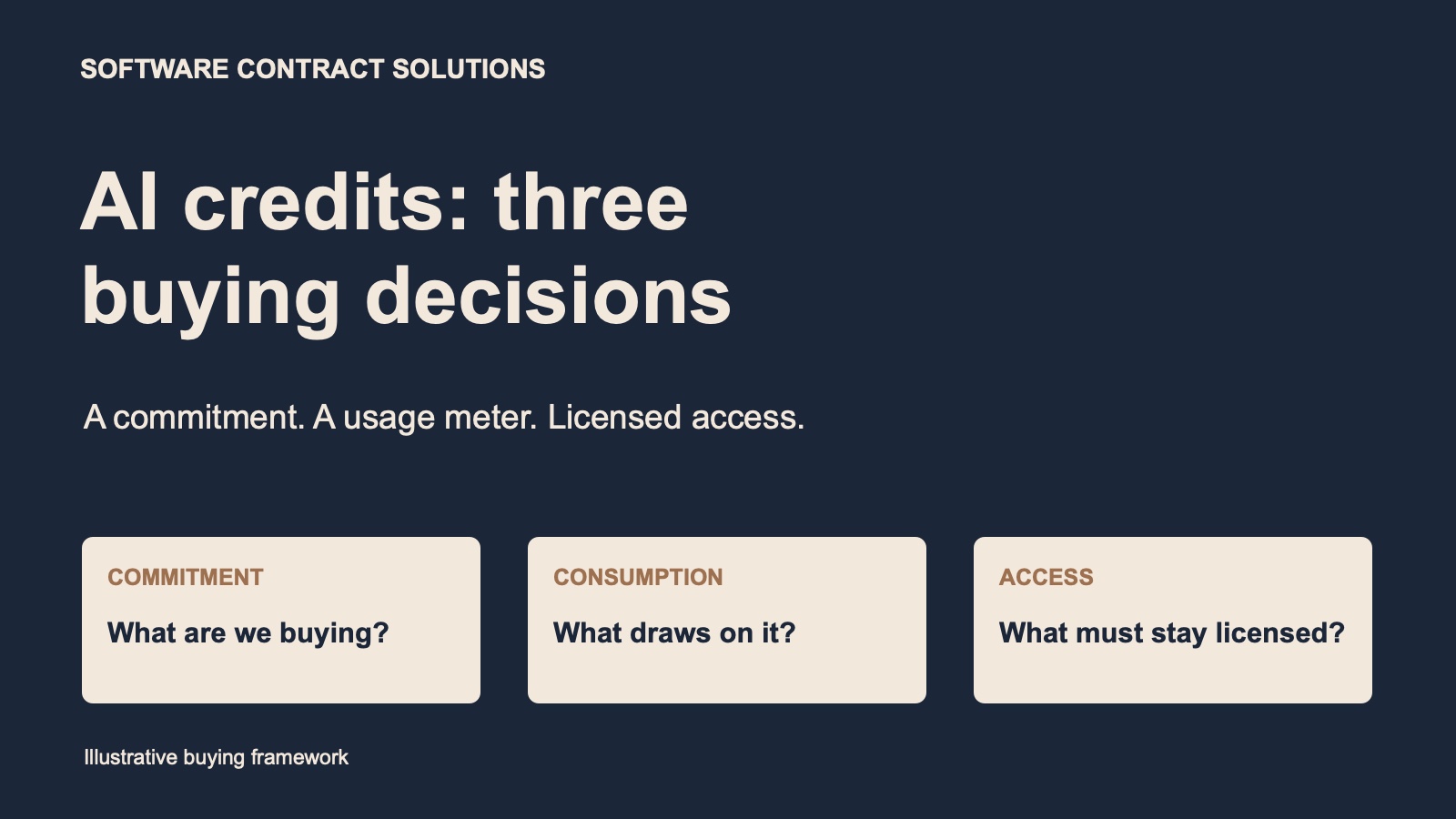
Before approving a Microsoft AI credit purchase, separate three decisions: the amount your organization commits to buying, the usage that consumes credits, and the licenses needed to access the underlying services. A proposal can address one of those decisions while leaving the others unresolved.
Microsoft’s November 15, 2026 Product Terms update adds Flex Plan and Copilot Credits definitions and conditions. For CIOs and procurement leaders, the practical question is how the proposed purchase connects to real workloads, an accountable budget and the right access. Start there before an attractive commitment becomes the default spending baseline.
What the new wording separates
The published online-service terms describe Flex Plan as an eligible-purchase commitment, separate from service licenses, and make those purchases noncancelable, nontransferable and nonexchangeable. Copilot Credits meter eligible AI use; underlying licenses remain required.
These definitions do not make every AI credit offer a Flex Plan. Confirm which product and purchasing model the proposal actually uses.
That makes the product name an incomplete buying specification. Ask the supplier to identify the exact offer, eligible services, applicable term and governing documents. Have your agreement owner establish which version and purchasing program apply. A public change-log date does not establish that an unseen agreement changed on that date.
| Buying decision | Question to resolve | Evidence for approval |
|---|---|---|
| Commitment | What are we agreeing to buy, over what period? | Exact offer, term, payment schedule and eligible purchases. |
| Consumption | Which workloads draw on the balance, and what happens beyond it? | Applicable meters, rates, coverage and billing path. |
| Licensed access | What must remain licensed for those workloads to run? | Required products, services and data-source permissions. |
Build a cost view that counts each item once
Put the proposed commitment alongside the rest of the deployment’s cost. Show what eligible consumption it would cover, any usage billed outside that coverage, prerequisite subscriptions and the cost of implementing and operating the workflow. Reconcile the periods so an annual commitment is compared with an annual forecast.
Avoid adding the same covered usage twice. If a forecast includes both a prepaid purchase and the consumption it is intended to cover, show how that consumption draws down the purchase. Separately identify charges that remain outside it. Finance should be able to trace each line to a purchase obligation or an incremental cost.
Microsoft’s usage-based billing overview distinguishes fixed licensing, prepurchase, pay-as-you-go and capacity options, depending on the service. Check the particular model in the proposal. Do not assume that every credit product has the same expiry, rollover, pooling or overage rules.
Test the forecast that makes a commitment attractive
Consider a hypothetical organization planning AI workflows across several departments. One team has a repeatable weekly process. Another is running a short pilot, and a third expects demand only after a system integration is complete. Treating all three forecasts as equally certain could turn an optimistic rollout plan into a purchase obligation.
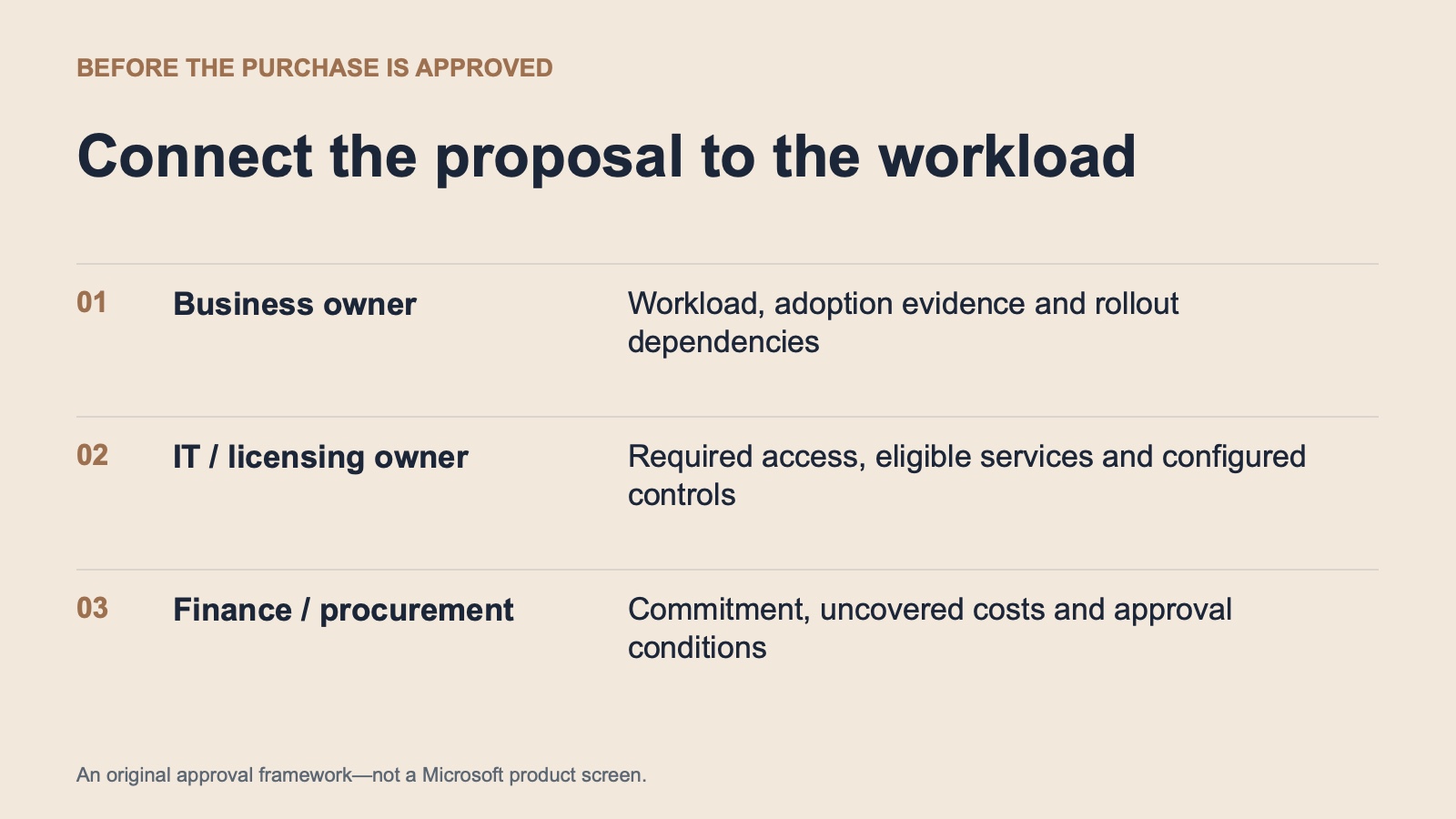
Have each business owner identify the workload, expected frequency, rollout dependency and evidence supporting its forecast. Compare a lower-adoption case with the expected case and a higher-consumption case. Keep the unit assumptions visible: a task, an agent action and a credit are not automatically interchangeable measures.
Then ask what would happen if deployment slips, a workflow is retired, or demand exceeds the plan. Confirm the offer’s treatment of unused amounts and additional usage rather than assuming a balance can be moved elsewhere. Compare the commitment with a smaller approved rollout or another eligible billing option. The useful discount is the one supported by demand your organization can explain.
Make spending controls part of the buying decision
A purchase approval needs a named person who can explain actual usage and act when it changes. Agree which workloads may consume credits, which budget pays, what threshold prompts review and who can authorize expansion. Align those decisions with the configuration your administrators can actually enforce.
Microsoft’s spending-policy guidance includes service scope, limits and alerts. It also documents an Auto-apply new services setting that can bring newly supported services into a policy. Have the administrator and budget owner review that choice together so future coverage matches the approval.
Keep configuration records and billing evidence alongside the commercial forecast. A usage dashboard helps explain consumption; the invoice and governing offer establish the charge. Review the relationship between them before the next commitment is approved, especially when several teams share a purchasing arrangement.
Keep enterprise and government purchasing contexts distinct
Identify the purchasing program, agreement, cloud environment, SKU and ordering channel before applying public guidance. A channel-specific announcement about one Copilot offer does not establish the same availability, defaults or terms for every Enterprise Agreement, reseller arrangement or government deployment.
For a state agency or another public-sector organization, involve the procurement owner before expanding the proposed scope or payment structure. Confirm the permitted purchasing route, funding approvals, data requirements and available offering for that organization. Establish who approves a change in consumption limits as well as who approves the initial purchase.
Bring a commitment decision to the approval meeting
The final decision should identify the business workloads, the proposed purchase, required access, a cost range and the conditions that would trigger another review. Give unresolved assumptions an owner. If a supplier cannot yet confirm a meter, eligibility condition or billing treatment, keep that item visible in the decision rather than hiding it inside a single annual total.
SCS License Advisory Services can help assess the licensing baseline and commercial position. Its SaaS Negotiations and Benchmarking service supports the wider buying decision. To discuss a proposed AI commitment, request a free introductory consultation. Bring the offer name, decision date and workloads the purchase is intended to support.